Key Takeaways (or TL;DR)
- The Uber effect describes how riders’ expectations of taxi booking replaced the phone-based dispatch and street-hailing experience with instant booking, real-time tracking, and cashless payments.
- Technology is one of the biggest competitive advantages in this transformation.
- Uber’s effect goes far beyond ride-hailing. It accelerated the adoption of MaaS (Mobility-as-a-Service), TaaS (Transportation-as-a-Service), and multimodal transportation.
- Traditional taxi operators faced real disruption, but many survived by launching their own apps, partnering with technology vendors, or adopting white-label platforms.
- The Uber effect gives you a lesson that solving a genuine, everyday friction point with the right technology can reshape an entire industry.
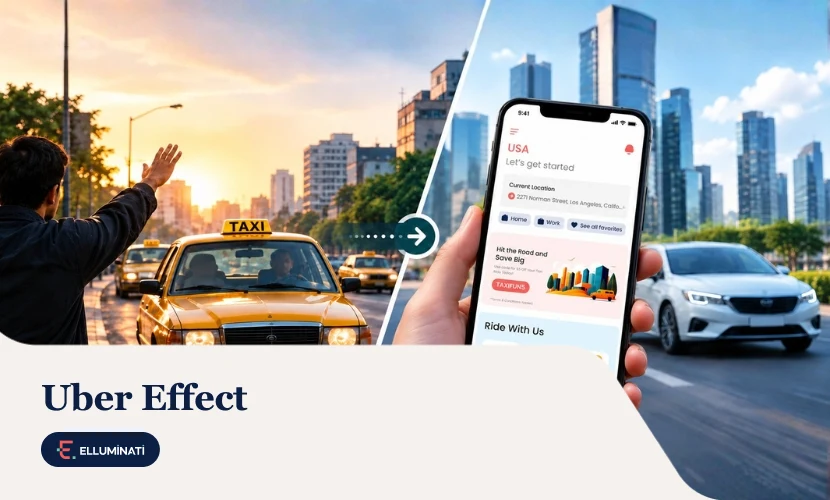
In little more than a decade, Uber has brought a major shift in people’s preferences for taxi services. And it forced an entire transportation industry to catch up. This shift is often called the “Uber effect”.
Understanding how Uber changed transportation matters for more than historical interest. It’s a practical case study for any founder building a technology-driven business in a market that is already served by traditional players.
In this article, we will help you break down the Uber effect, what transportation looked like before, the challenges it entails, how Uber’s impact has changed the transportation industry, and the success strategies that every entrepreneur must consider from Uber before making the shift into this evolving taxi market.
Challenges in Traditional Taxis Before Uber
Before the introduction of Uber, urban transportation was largely dominated by traditional taxi companies, local cab operators, and public transportation services.
People used to hail taxis on the street, call local dispatch centers, or wait at a taxi stand to get a ride. However, they faced several issues in the traditional taxi system.
- Inconsistent availability of taxi services, particularly during peak hours, holidays, or bad weather.
- No real-time visibility into the booking process from acceptance through arrival, increasing riders’ wait times.
- Lack of pricing transparency, with no way for riders to know the fares in advance.
- Poor service quality due to the lack of a standardized customer experience.
- Cash-only payments made transactions less convenient.
How Uber Changed the Transportation Industry?
Real-Time Ride Booking
Earlier, riders had to wait for a taxi at taxi stands or call operators to send cabs. Uber replaced the entire phone-based booking process with GPS-matched mobile app bookings.
It allows riders to book a ride instantly through a single platform, and the app’s algorithm automatically matches riders with nearby drivers using the built-in GPS. This reduces rider wait time, as the entire assignment process happens automatically.
Cashless Payments and Digital Convenience
One of the biggest challenges in urban transportation was heavy reliance on cash payments. As a result, riders always had to carry cash while traveling.
Uber solved this concern by implementing an automatic payment system, where riders add their debit or credit card details once, and the fare is deducted automatically after the trip ends.
Payment options that Uber supports:
- Credit and debit cards, including Visa, Mastercard, Amex, and Discover
- Digital wallets like Apple Pay, Google Pay, Venmo, PayPal, and Cash App
- Local wallets and UPI apps, like Paytm in India
- Cash payment acceptance in select regions
- Uber gift cards and Uber cash balances
Expanding Business to Underserved Areas
Traditional taxis mainly served busy commercial areas like city centers and airports. Booking an instant ride during peak hours and late-night hours was consistently difficult for riders.
Uber addressed this by serving underserved and traffic-congested areas that traditional taxis rarely covered. Moreover, it also extended its service availability 24/7, which made rides accessible for riders whenever they needed them.
Data-Driven Mobility Services
Uber uses data analytics tools to track pick-up and drop-off locations, fares, wait times, and demand patterns. This helps it to:
- Predict accurate ETAs (Estimated Arrival Times) for riders
- Forecast demand in advance and pre-position drivers accordingly
- Optimize routes to reduce trip time
- Adjust fares dynamically based on live supply and demand
As a result, riders got more accurate pickup times, fairer pricing, and shorter wait times, which enhanced their trust in the platform and made them rely on it for everyday commuting.
Ready to Turn the Uber Effect Into Your Competitive Advantage? Elluminati’s Feature-rich, Market-Tested Ride-Hailing Solution is Built for Long-Term Success
What is the Impact of Uber on the Transportation Sector?
Reduced Private Vehicle Dependency
Instead of purchasing and maintaining their own vehicles, people are now viewing transportation as an on-demand service. Whether for daily commutes, rentals, corporate transfers, or ridesharing, riders can access these services through a single platform, from anywhere, anytime, hassle-free.
This shift contributes to rising demand for Transportation-as-a-Service (TaaS), which is projected to reach $10.4 bn by 2034, according to Global Insight Services.
Uber also introduced UberX Share (formerly known as Uber Pool) for riders who want to share rides with others heading in the same direction.
Shared ride options split the fares among riders, which lowers the per-trip costs. This makes trips affordable for riders. Due to this, more people are giving up personal car ownership.
Integration with Urban Mobility Ecosystems
The on-demand taxi apps streamline the first-mile to last-mile travel experience by giving riders easy access to book a trip from their exact pick-up location to the final destination.
Uber resolves this first- and last-mile connectivity issue by integrating directly with public transit, local rail, and mass rapid transit systems, as well as through its own on-demand options like Uber Moto (two-wheelers) and Uber Auto/E-rickshaws.
Moreover, Uber is integrated into many public transit and navigation applications in major cities worldwide. This includes:
- Citymapper’s routing engine combines fixed transit networks and car routing to offer Uber and public transit options together.
- Google Maps features a dedicated ride services tab powered by the Uber API.
- Moovit also uses Transit APIs to give riders substitute segments of bus, train, or subway with an Uber ride across 22 countries, including the USA, the UK, Australia, and Mexico.
- Ixigo partnered with Uber to let riders book their Uber rides along with their train tickets, delivering end-to-end journey planning.
Influence on Smart City Development
Each trip, booked through the platform, generates data, including pickup and drop-off locations, fares, distance, and time. These data sets provide insights about how people move in different areas and times.
Uber ran Uber Movement, a public data-sharing initiative (2017 to 2023) that provided city planners with aggregated historical travel-time data. Such information remains useful for city planners and businesses to predict demand, optimize infrastructure, and improve traffic management.
Rise of Multi-Modal Transportation
Besides cars, Uber also allows riders to book rides for e-scooters and e-bikes for short trips. It has added car rentals and public transit booking services in its app as well. So, riders can choose between different mobility options from a single platform.
This reflects a bigger shift toward Mobility-as-a-Service (MaaS), which brings multiple transportation modes in one place. This means owning a fleet is no longer a differentiator for businesses. But a multi-modal ecosystem builds a unique position for your company in the MaaS landscape.
What is Uber’s Impact on the Taxi Industry?
Increased Competition for Taxi Operators
Traditional taxi operators once faced limited competition. But today, they compete with tech-driven platforms that have streamlined the taxi-booking journey for riders worldwide.
This shift from taxis and car services to an open marketplace created several hurdles for traditional taxi operators, such as:
- Declining rider retention, due to a prompt shift in their preferences.
- Lack of transparency over service status and pricing makes it harder for taxi operators to compete on value.
- Unable to predict peak hours like Uber’s surge model, resulting in missed opportunities to earn more from services in real time.
- Traditional taxi services primarily focus on busy city areas and have narrower service categories. The app-based platform effortlessly expands its ride categories to include airport and corporate rides separately, thereby increasing revenue channels.
Digital Transformation of Taxi Businesses
The operators who survived Uber’s disruption were the ones who accepted that the taxi business is no longer about hiring a driver and purchasing a vehicle; rather, it now requires operating an app-based booking platform like Uber and including key features and functionalities like:
- GPS-based tracking to monitor the real-time status of riders, drivers, and the fleet.
- An auto-dispatch algorithm that connects riders with nearby drivers immediately after the request is placed.
- Multiple payment options that remove dependence on cash alone.
- A feedback system that builds trust among users and provides operators with transparency into the business.
- Fleet management software to track vehicle maintenance, driver schedules, and overall business performance in one place.
For businesses seeking an ideal way to switch their traditional taxi operations to a digital platform, collaborating with a taxi app development company would be a practical option.
An experienced development partner will take the time to understand business requirements, map an aligned strategy, and build a solution that scales as the business grows.
Changes in Pricing and Service Standards
Traditional taxis often had inconsistent fares, limited trip information, and no visibility into driver profiles, leading to an inconsistent experience for riders. However, Uber redesigned the booking journey and enhanced the overall service quality by offering them:
- Transparent pricing
- Real-time trip visibility
- In-app call and chat support
- Automated trip invoices
- Feedback system
How Traditional Taxi Companies Survived Against Uber
Many taxi companies started adopting digital capabilities. This approach helped them modernize operations without fully changing their service models.
Launching Local Taxi Apps
Many taxi companies started launching their own booking apps. With features like real-time ride tracking, digital payments, fare estimates, and driver information, these platforms helped operators offer riders a convenient ride booking experience and meet the expectations Uber had set.
Partnering with Technology Providers
Some taxi operators could not afford to have in-house engineering teams to build apps from scratch. So, they partnered with experienced technology vendors for specific functionalities like a dispatch engine or a GPS tracker. This approach helped them modernize their operations quickly and affordably.
Opting for White-Label Solutions
Pre-built, white-label taxi app solutions gave operators another way to digitize their operations without developing the technology from the ground up. These solutions came with rider and driver apps, an admin web panel, and essential features like real-time tracking built in. This allowed companies to deliver Uber-like experiences with ease.
How Does the Uber Effect Benefit Riders, Drivers, and Businesses?
Greater Convenience for Riders
Before ride-hailing apps, booking a ride meant calling a dispatcher, waiting for a taxi without a clear arrival estimate, and paying in cash. Riders can reserve a ride in minutes for themselves, track the driver’s location in real time, choose multiple ride categories, and get support whenever they need it.
Improving Driver Experience
Instead of working on fixed hours or in fixed shifts, drivers have the flexibility to set their own working hours. They can even accept or decline ride requests according to their preferences.
Moreover, the app-based platform helps drivers enhance their earnings through performance-based incentives, transparent pricing, and demand insights like heat maps showing high-demand areas.
Enhanced Service Transparency
Traditional taxi systems offered little visibility into fare calculations and trip details. This created uncertainty among riders about pricing.
Ride-hailing platforms covered this gap with upfront pricing, geolocation-based tracking, driver ratings, and an in-app digital invoice. Together, these features create transparency, which helps businesses build trust among riders.
Faster Innovation Across Transportation Services
The Uber effect accelerated the growth of the entire transportation industry. Riders are gradually shifting towards app-based services due to its easy-to-access booking process, live tracking, and convenient payment options.
Beyond its growing adoption among users, the Uber business model has also encouraged businesses, startups, and fleet operators to enter the ride-hailing space and build on an ecosystem that continues to grow.
Moreover, Uber has made it easier for businesses to scale by supporting multiple vehicle categories and operations across several cities.
Launch a Ride-Hailing Platform that Streamlines Daily Operations with Elluminati’s Ready-Made Taxi App Solution
Lessons Businesses Can Learn From the Uber Effect
Solving Real Pain Points of Riders
Introducing a new product or service is not always the solution to grow a business and compete in the market. Instead, solving the real pain points of the target audience tends to work more efficiently.
Uber also addressed common frustrations, such as long wait times, reliance on phone-based dispatch centers, and uncertain pricing, through technology. This customer-centric approach helped them quickly gain market attention.
Creating Seamless User Experiences
The simpler the booking flow for riders, the easier it is for businesses to grab their attention. Uber has streamlined riders’ experience with its user-friendly interface.
From ride booking and live tracking to pricing transparency, Uber keeps the entire process smooth and reliable for riders. This helps businesses build strong relationships with their riders.
Effective Use of Technology
The drastic changes in today’s transportation industry are mainly driven by technology. Combining advanced features like live tracking, cloud infrastructure, and digital payments is what makes the Uber effect stronger.
Businesses that invest strategically in taxi app tech stack can streamline processes, enhance overall efficiency, and drive long-term growth.
Scaling Through Network Effects
Uber is built on a scalable infrastructure. Since its launch, the company has expanded its services across multiple countries and cities because its platform easily adapts to new cities, pricing models, and operational requirements.
Businesses must design a platform considering future scalability in mind; this helps them easily expand their services across regions without the need to rebuild the solution every time from scratch.
Continuously Adapt to the Changing Market
The transportation industry is continuously evolving, and to keep pace with that, Uber is also introducing new services and adopting emerging technologies.
This highlights that businesses must adapt to new technologies and keep updating their services to deliver a better rider experience along with the evolving market needs.
How Can Elluminati Help You Adapt to the Uber Effect?
The Uber effect is not a story about one company’s journey; it’s a demonstration of how app-based booking, transparent pricing, and data-driven operations redefined what riders expect from any transportation service. For businesses, the real takeaway is to focus on solving riders’ real pain points and delivering a seamless experience.
If you are planning to move your taxi business onto a digital platform and to serve riders’ expectations efficiently, Elluminati delivers, market-ready, ready-to-launch Uber clone app solution. With over 14 years of experience and 450+ successful mobility projects delivered, we bring hands-on expertise in the industry.
It includes dedicated rider and driver apps, and web panels for the admin, along with support for multiple languages and currencies. It covers everything you need to modernize and grow your business without building the technology from the ground up.
FAQs
The Uber effect demonstrates how a technology-driven ride-hailing platform transformed the overall transportation industry. It changed riders’ preferences by introducing real-time tracking and a cashless payment experience, all through a single platform.
Uber changed the transportation industry by introducing:
- Real-time ride booking via mobile app
- GPS-based driver tracking
- Cashless transactions
- Transparency over fare and ETA
- Automatic dispatch with the app’s algorithm
- Data analytics for better decision-making
Unlike traditional taxi operators, who invest in infrastructure and in building a team to manage fleets, Uber built a platform that lets riders book, pay for, and track a ride in real time without needing to invest in physical infrastructure.
The Uber effect goes far beyond the transportation industry. This includes:
- Delivery sectors like DoorDash and Swiggy
- Logistics and last-mile delivery like Porter and Lalamove
- Home services like TaskRabbit
- Healthcare appointments like Zocdoc and Practo
Yes, Uber has a significant impact on revolutionizing the transportation sector. It expanded its services to suburban and underserved areas, offered 24/7 service accessibility, introduced wheelchair-accessible vehicle programs (UberAssist, WAV), and also increased ride categories to include Uber Pool, Uber Go, Uber Comfort, and Uber Black, among others.
Uber’s effects continue to impact the future of mobility with its:
- EV adoption
- Integration of Autonomous Vehicles
- Multi-modal integration
Some of the core technologies that made the Uber effect possible include:
- GPS and real-time location tracking
- Mobile applications
- Data analytics
- Digital payment integration support
- Cloud computing