In the world of technological advancement, people believe that speed, convenience, and friendly service are key factors that deliver an enhanced customer experience, and this is where AI in last-mile delivery comes into play. It empowers businesses to automate repetitive tasks, reduce operational costs, and elevate the delivery experience.
Whether you are a logistics startup or an established enterprise seeking to invest in AI-powered last-mile delivery solutions, this article is the best fit for you. It covers the effective roles of AI and its benefits. Additionally, it explores the emerging future of AI in last-mile delivery, empowering businesses to compete in the evolving market.
Key Roles of Artificial Intelligence in Last-Mile Delivery Business
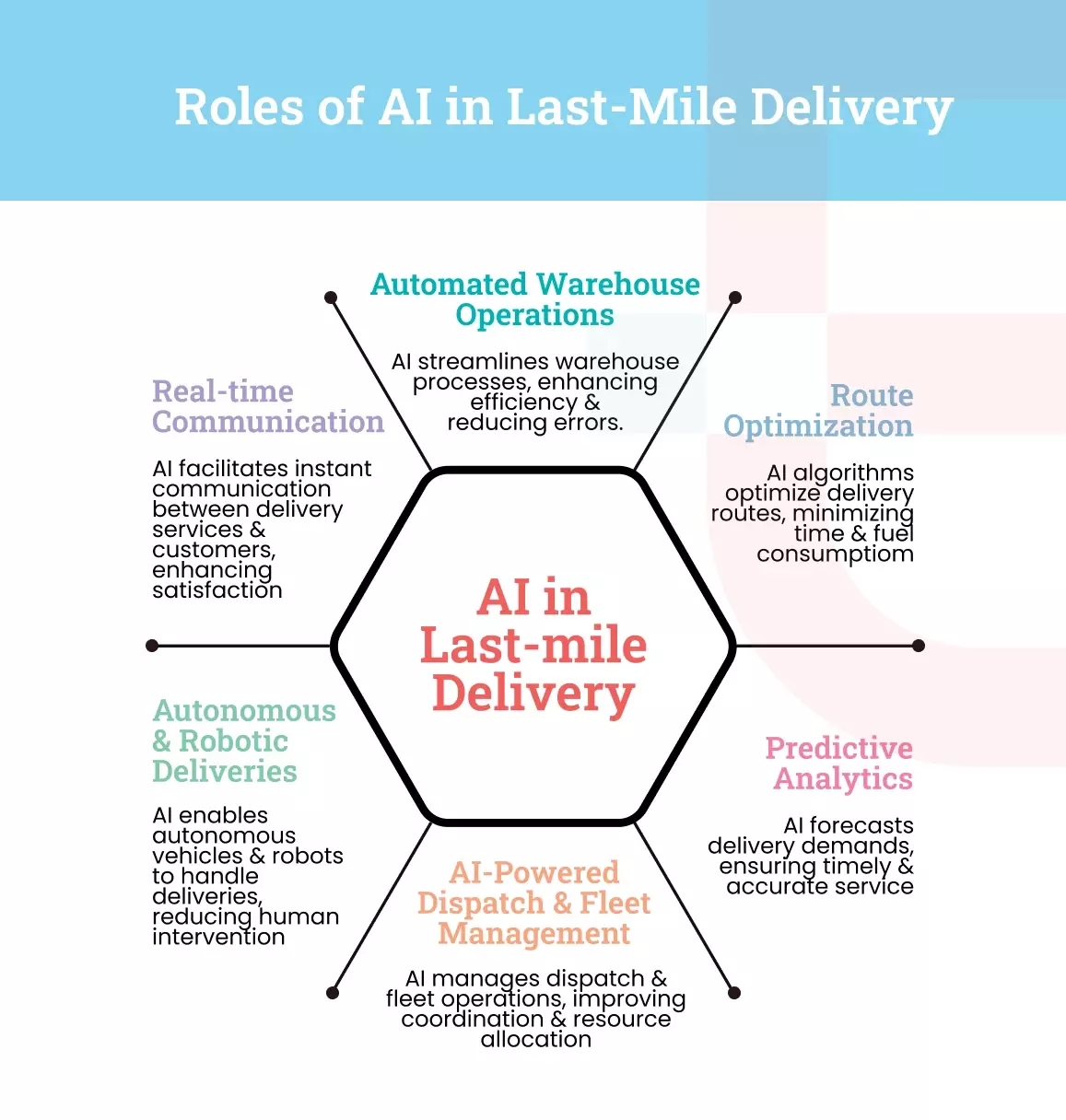
AI in the last-mile delivery business has significantly impacted the modern era, boosting its efficiency and innovation.
By leveraging advanced AI-powered algorithms and tools, such as machine learning, businesses can streamline complex delivery processes and ensure faster, more accurate deliveries, all while meeting evolving customer expectations.
Here, we have successfully covered how AI is reshaping the delivery ecosystem through its key roles:
Automated Warehouse Operations
For all the last-mile business operators, warehouse management is essential. From order collection to packaging, AI’s automation prowess is reshaping how businesses operate their warehouses in today’s fast-paced digital era.
According to a McKinsey survey of 65 top logistics & supply chain executives, 70% plan to invest approximately $100 million in automation over the next five years (2024-2029), prioritizing speed, process stability, and reduced manual processes.
These AI-driven systems utilize computer vision to identify product demand and support the team in selecting and sorting packages. A machine learning algorithm also predicts stock availability and future demand, ensuring high-demand products are prominently displayed and easily accessible to customers, thereby minimizing delays and the need for manual intervention.
Route Optimization for Seamless Deliveries
Route optimization is another essential capability that last-mile businesses must deliver at a top-notch level, and here, AI plays a significant role. We all know that even a small traffic jam can have a significant impact on last-mile deliveries, which is why businesses are investing more in AI-driven route optimizations rather than relying on static maps and basic tools.
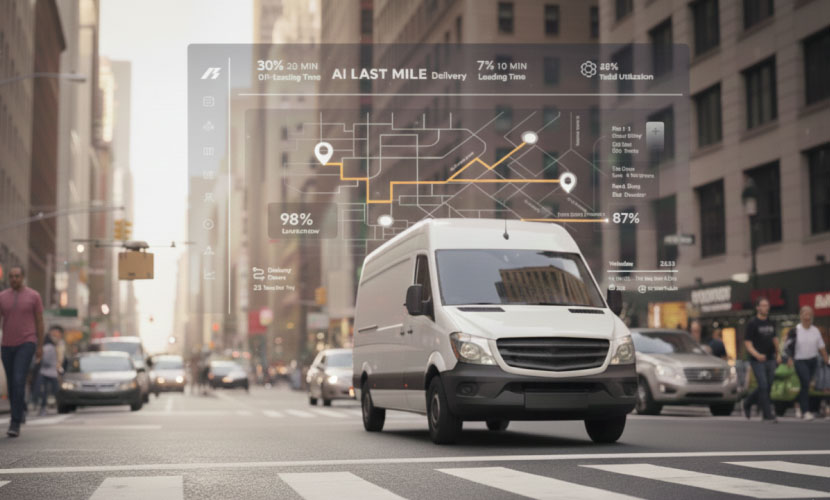
AI dynamically adjusts delivery routes by analyzing potential routes and considering factors such as traffic congestion, weather, and delivery priority. Not only that, it continuously notifies route updates based on live inputs, predicting potential slowdowns to ensure on-time deliveries.
Predictive Analytics for Accurate Delivery
Uncertain package deliveries directly increase customer frustration, but AI in last-mile delivery addresses this by leveraging predictive analytics. AI enables accurate deliveries by analyzing historical data, traffic patterns, weather, and other external factors to predict the actual delivery timing.
In fact, it not only helps businesses in predicting the delivery time, but it can also assist them in anticipating the future scenarios of their business based on the current market trends, as well as frequently updating it based on the fluctuating weather conditions, traffic demand, resulting in estimating the proactive measures to reflect the real-world dynamics.
AI-Powered Dispatch & Fleet Management
For every last-mile delivery business, it’s essential to consider speed, precision, and coordination. Last-mile business operators are required to handle hundreds of deliveries a day, and to do so, they must keep the dispatch process smooth and efficient. Here, the role of AI in last-mile delivery is crucial.
AI-powered dispatch tools leverage machine learning, real-time analytics, and GPS data to optimize fleet allocation. When combined with AI in logistics, these systems improve transparency and reduce idle time, ensuring each vehicle operates at maximum productivity.
Autonomous & Robotic Deliveries
Another transformative role of AI in the last-mile delivery solution is the growing adoption of autonomous delivery systems. According to Grand View Research, the global delivery drone market size is expected to grow at a CAGR of 42.6% from 2023 to 2030. From drones to robots, AI is paving the way for more advanced and faster contactless delivery options. It not only promises customers faster deliveries but also provides a cost-effective solution.
To streamline the autonomous process, AI relies on technologies such as computer vision, sensor fusion, and machine learning algorithms to help robots interpret their surroundings. As fully autonomous delivery is not yet at the forefront, AI-powered drones are among emerging solutions that could lead to shorter package delivery times.
Real-time Communication with Customers
Maintaining smooth communication with customers is essential for every business to provide them with instant and reliable support. There is nothing wrong with saying that customers are eager to know what is happening with their deliveries, and AI streamlines this process with its powerful assistant tools.
Utilizing the natural language processing (NLP) and predictive communication models in solutions like chatbots helps businesses easily understand customers’ queries and deliver prompt responses. These AI-powered functionalities also share real-time order status updates and delivery changes, increasing their loyalty towards your business and encouraging them to use the platform repeatedly.
Take a Thriving Step into the Future of Automation—Implement AI in Last-Mile Delivery to Maximize Business Efficiency
Explore the Transformative Benefits of AI in Last-Mile Delivery
Artificial intelligence is reshaping the logistics landscape by addressing key challenges in the delivery process. Below are some of the most impactful benefits of AI in last-mile delivery that drive success for modern businesses.
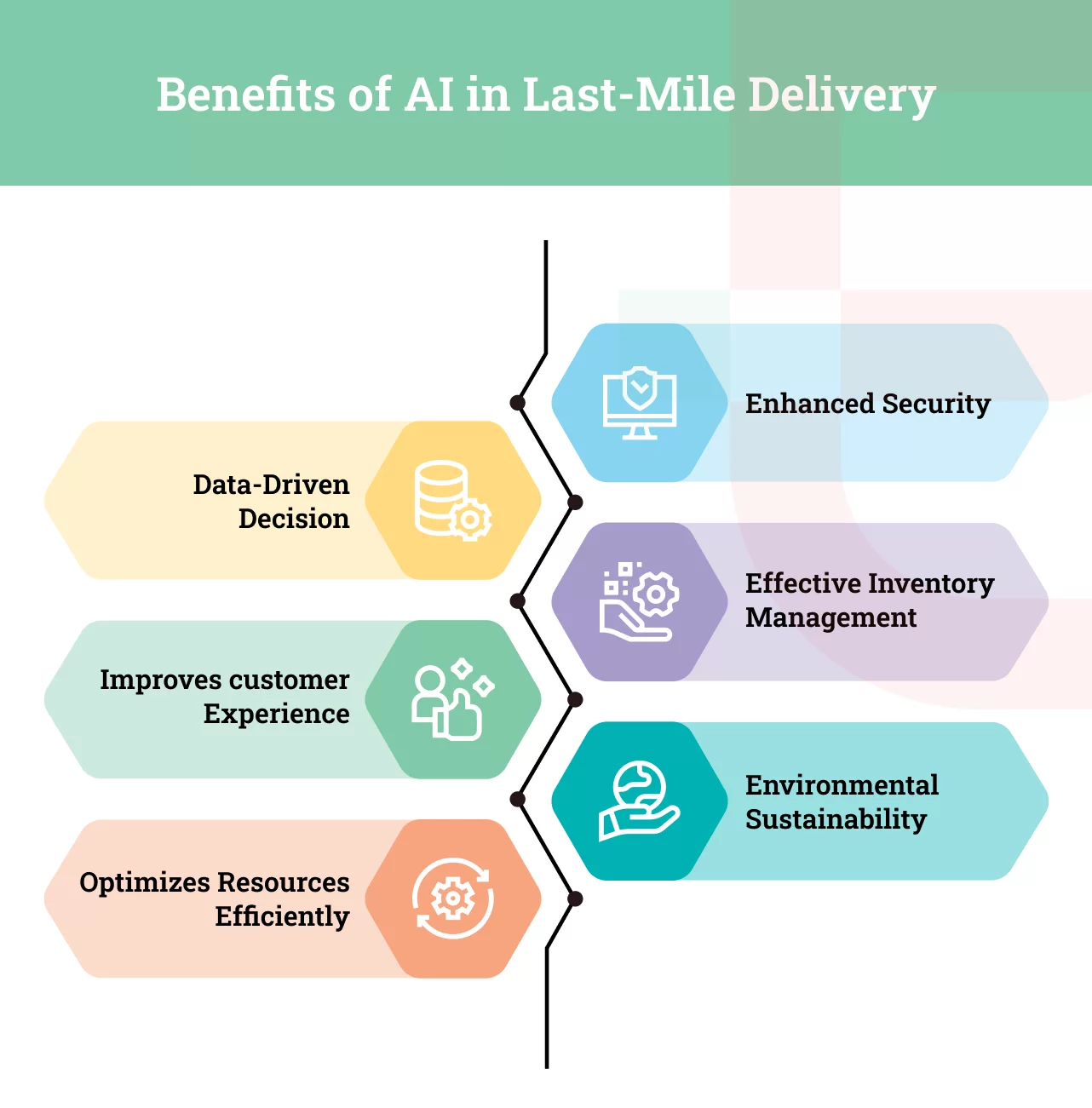
Enhanced Security
One of the key benefits is that it enhances overall platform security by integrating tools such as facial recognition and biometric authentication. This ensures the package has been delivered to the right person, thereby mitigating the risk of theft.
Effective Inventory Management
By adopting AI into the last-mile delivery business, entrepreneurs can manage inventory most effectively, predicting product demand based on historical data and market trends. This minimizes the risk of stockouts and ensures that all high-demand products are available in the market for timely deliveries.
Environmental Sustainability
Another significant benefit of AI in last-mile delivery is its contribution to sustainability. Through AI-powered route optimization, businesses can reduce fuel consumption and carbon emissions. As eco-friendly deliveries become a customer preference, businesses can increasingly adopt EVs for delivery purposes to minimize their environmental impact.
Optimizes Resources Efficiently
With AI, businesses can optimize and allocate resources more effectively by analyzing factors like customer location, vehicle capabilities, and more. This ensures that multiple deliveries are handled simultaneously, improving delivery speed and maximizing resource utilization, making it one of the core benefits of AI in last-mile delivery.
Improves Customer Experience
Immediate customer support services enhance overall business value, and with the aid of AI, businesses can effectively leverage these benefits. AI-powered chatbot solutions provide customers with real-time delivery updates, enabling them to track their package status and promptly resolve any queries. This reduces repetitive, manual work, ultimately enhancing customer satisfaction by automating routine tasks.
Data-Driven Decision
Predicting future market demand is a key requirement for every business, and AI in last-mile delivery works seamlessly to meet this need. By analyzing real-time market data, businesses can easily forecast future delivery volumes and customer demand, effectively manage resources and inventory, and deliver services to customers with greater accuracy.
Overcoming Challenges of AI in Last-Mile Delivery
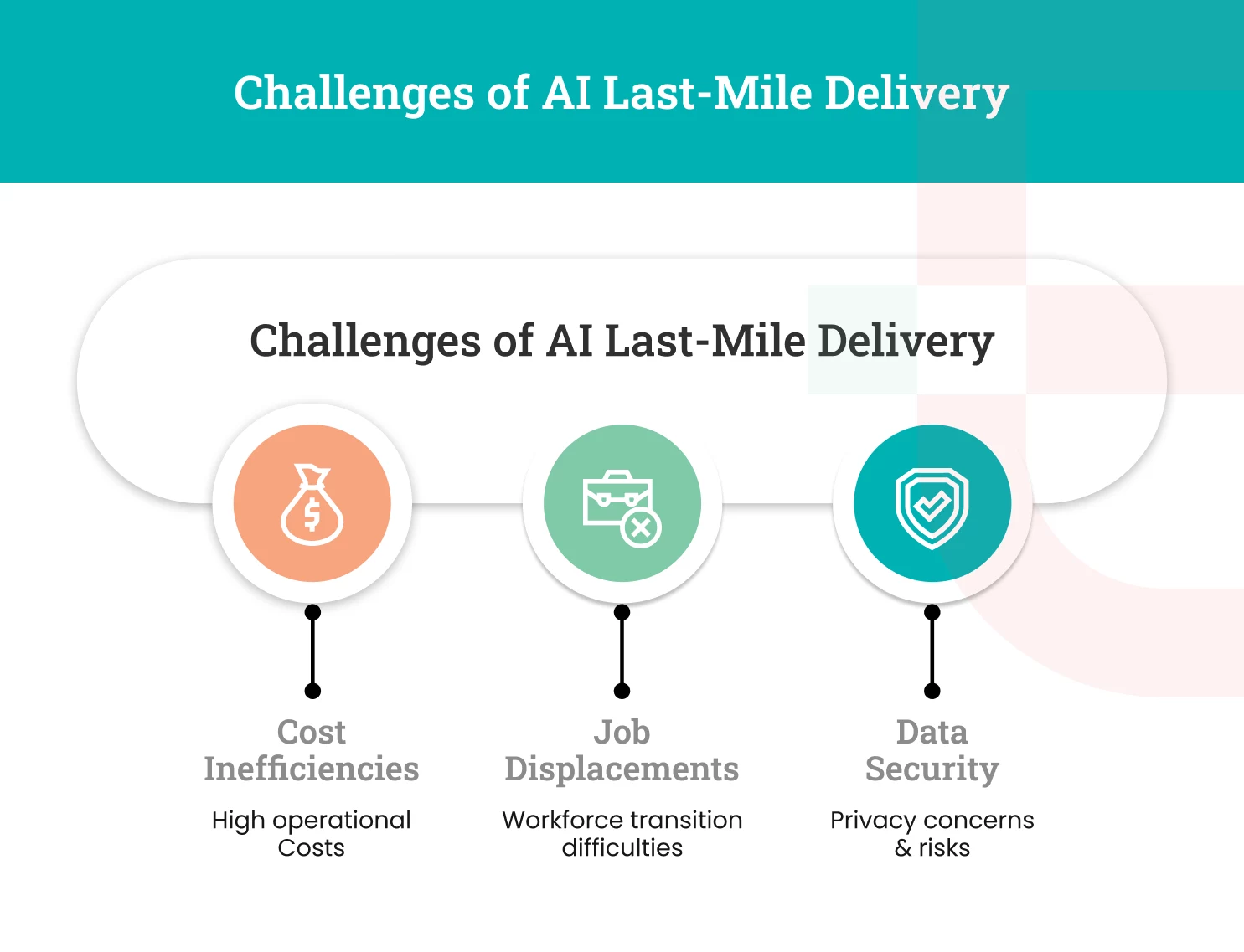
Incorporating AI into last-mile delivery brings its own set of challenges, which businesses must address to ensure smooth integration.
Cost Inefficiencies
Implementing AI in last-mile delivery becomes expensive for most businesses. This includes initial setup costs, upgrading entire infrastructures, and integrating AI with the existing systems. This financial commitment can be daunting, especially for small or startup businesses with limited budgets.
Effective Solutions:
- Adopting a scalable AI platform that easily allows gradual implementations
- Implementing cost-efficient AI models that require minimal hardware investment.
High-Quality Data Security & Privacy
Another significant challenge that a business must address when integrating AI into last-mile delivery is ensuring data security and privacy. Since AI collects vast amounts of customer and business data, maintaining security and privacy is crucial.
Effective Solutions:
- Implement end-to-end encryption to safeguard business information.
- Conduct regular audits to detect and prevent errors before they occur in AI systems.
Job Displacements
As AI is adopted by most businesses to improve efficiency, it also raises concerns about potential job displacement in the last-mile delivery sector. AI is now performing most of the repetitive tasks previously performed by humans, thereby reducing workforce requirements.
Effective Solution:
- Businesses can train their employees for managing AI systems and data analytics roles.
- Adopt hybrid AI models that require both human and AI effort to succeed.
What is the Future of AI in Last Mile Delivery? – Let’s Discover Its Emerging Trends
Advancements in automation, robotics, and intelligent analytics are shaping the future of AI in last-mile delivery. These innovations are set to redefine how businesses deliver faster, smarter, and more efficiently.
Autonomous Delivery Ecosystem
One of the most promising developments in the future of AI in last-mile delivery is the rise of autonomous delivery fleets and drones. These driverless or drone functionalities operate 24/7 to provide faster and more convenient delivery services to customers.
Although not widely adopted, firms such as Domino’s and Amazon use cutting-edge technologies to deliver packages as efficiently as possible.
Robotic Warehousing & Sorting
The booming future of AI in last-mile delivery is also greatly impacted by automating warehouse management. It facilitates businesses by automating product sorting, providing real-time stock updates, forecasting demand to prevent overstocking, and more.
According to the latest market research, the warehouse robotics market size is projected to grow at a CAGR of 17.70% from 2025 to 2030.
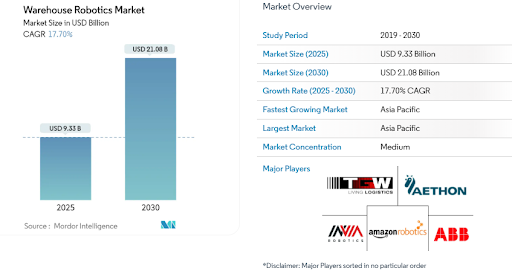
Source:Mordor Intelligence
Personalized On-Demand Delivery Services
AI is revolutionizing customers’ experience by offering personalized shopping and delivery services. The advanced algorithm, powered by AI, tracks past customers’ data, including their purchase history and preferences for a delivery man, to provide them with customized recommendations and delivery options.
This functionality not only boosts customer satisfaction and loyalty by suggesting preferred options but also provides a voice-enabled ordering facility, enhancing overall customer experience.
Build Your AI-Based Last Mile Delivery Solution With Elluminati
AI in last-mile delivery is transforming how businesses enhance service quality, deliver packages on time, and do so in many other ways, as seen in this comprehensive blog.
Entrepreneurs who are excited to unlock the power of AI-driven solutions can collaborate with us for AI development services. We will help you streamline your last-mile delivery business by integrating all the necessary functionalities, such as dynamic routing, predictive analytics, and more, to elevate your overall business performance.
Our approaches focus on solving business problems by layering AI to create the real impact of AI. We will align any solution you need in the business. Every solution is built to scale, automate, and stay compliant with global solutions.
FAQs
AI in last-mile delivery is a process that utilizes advanced tools, such as machine learning, predictive analytics, and automation, to optimize route planning, delivery scheduling, and real-time tracking and enhance customer communication, making the entire business process seamless.
The following are some of the tips that you can follow to implement AI in your last-mile delivery operations effectively:
- Assess your business requirements
- Opt for the right AI tools and technologies
- Integrate AI with existing delivery systems
- Continuously monitor and optimize its performance
AI enables businesses to deliver personalized experiences by predicting customer preferences, adjusting delivery times, and providing real-time tracking updates. This results in customers receiving faster, more accurate delivery to their doorsteps.
As many leading last-mile delivery platforms adopt AI-powered capabilities, below are some of their best real-world examples:
- Amazon utilizes predictive analytics to deliver products the same day.
- DHL optimizes routes with AI and digital twins
- UPS leverages the ORION system, which saves millions of gallons of fuel per mile annually.
Autonomous vehicles powered by AI can navigate traffic, adjust routes in real-time, and complete deliveries without human interventions. These vehicles help businesses reduce operational costs, improve delivery speeds, and enhance their accuracy.
AI plays a vital role in making last-mile delivery more eco-friendly by streamlining delivery routes and optimizing vehicle loads. It not only helps businesses minimize fuel consumption but also enables them to deliver a faster, more reliable experience to their customers, thereby enhancing service quality.