Key Takeaways (or TL;DR)
- A dispatcher panel gives real-time control over rides, drivers, bookings, and operational exceptions that automated dispatch alone cannot handle.
- It helps businesses capture bookings from multiple channels. It also allows teams to manually assign, reassign, monitor, and recover trips in any case where the situation falls outside the standard automated flow.
- The dispatcher panel is mainly designed for real-time taxi dispatching, while the admin panel handles broader business configuration, users, pricing, reports, and platform management.
- A dispatcher panel may not be essential for every MVP, but it becomes increasingly valuable as booking volume, driver networks, booking channels, and multi-city operations grow.
Uber clone simplifies ride booking and matches riders with nearby drivers instantly in your taxi business. As your ride-hailing business grows, scenarios like ride cancellations, failed assignments, peak-hour demand, special vehicle requirements, and multi-channel bookings, such as phone calls or WhatsApp, often come up.
There comes a dedicated dispatcher panel that provides the operational control that helps your team monitor these situations and keep rides moving. Understanding the importance of a dispatcher panel can help you determine real-world operational demands as your business grows.
This article explains what a dispatcher panel does, how it differs from an admin panel, which booking and operational challenges it addresses, and when a ride-hailing business should consider adding one.
What is a Dispatcher Panel? How Does it Differ from the Admin Panel?
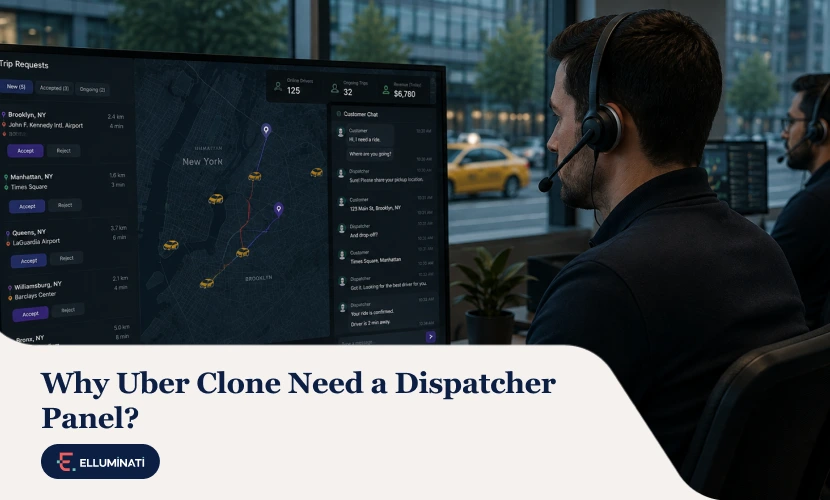
The dispatcher panel is a live, operational control layer within a ride-hailing platform that helps dispatch teams handle daily ride-hailing operations. It can monitor ongoing trips, coordinating with drivers, assigning rides, and handling multi-channel bookings that need a human decision rather than automated support.
Many entrepreneurs assume that the dispatcher and the admin roles are similar. But both are built for different purposes. One runs the business; the other manages the trip operations in real-time.
The business owner makes strategic business decisions that shape the platform, while dispatchers make operational decisions that keep daily ride activities moving.
Combining both responsibilities into a single interface may appear convenient, but it often creates unnecessary complexity by mixing business management with operational tasks. A dedicated dispatcher panel keeps these workflows separate, enabling both roles to work more efficiently.
Here’s a quick view of how both the admin panel and dispatcher panel function differently:
| Parameters | Admin Panel | Dispatcher Panel |
|---|---|---|
| Definition | A centralized dashboard that controls and configures the entire taxi business | A live operational dashboard that enables the dispatch team to manage and monitor trip dispatching |
| Primary Role | Manages overall business operations | Handle real-time ride operations and driver coordination |
| Core Focus | It includes defining pricing, approving the user base, generating reports, viewing all transactions, and managing other business activities | It includes live ride monitoring, booking handling, and driver assignment |
| Accessibility | Full platform accessibility | Access is limited to only operational tasks and assigned permissions |
| Level of Control | Controls business-level decisions | Handles immediate, mid-trip, and emergency ride coordination |
| Driver Management | Approves drivers and allows them to offer services under the platform | Views driver availability and coordinates assignments |
| Role & Permission Management | Creates and manages roles, gives permissions, and access controls for users | Cannot manage platform roles or has no access to give other permissions |
| Trip Management | View, audit, cancel, or review trips across the platform | Create, assign, reassign, monitor, edit, or cancel live trips instantly |
| Customer Support | Oversees complaints raised via support, handles refunds, and makes policy-oriented decisions | Provides first-level operational support during active trips |
Which Booking Channels Can a Dispatcher Panel Manage?
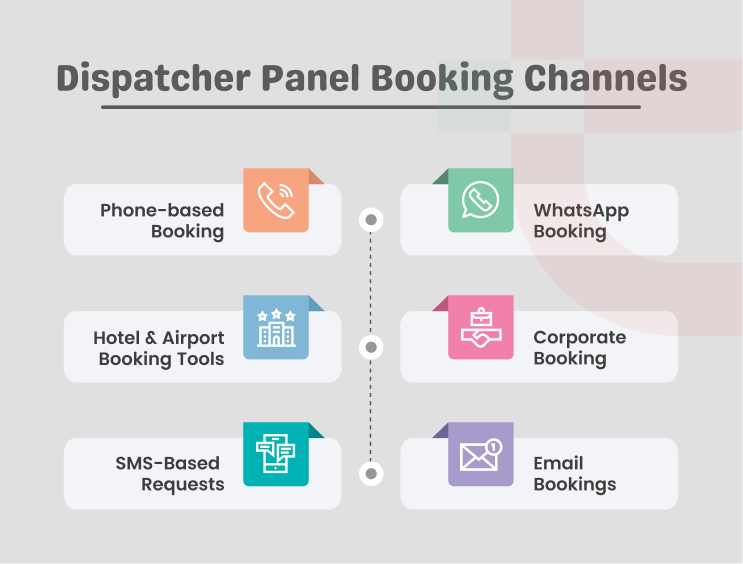
Although app-based bookings remain the primary channel for many ride-hailing businesses, only some rely on one source for bookings. In many regions, riders still prefer booking through phone calls, WhatsApp, SMS, or other channels like booking tools, making those channels an important way to increase your daily bookings.
A dedicated dispatcher panel can help fulfill these rides, which otherwise remain only in phone logs, chats, or manual records. It helps the dispatch team capture every booking within a centralized operational system, giving businesses visibility into their overall ride operations, while delivering a consistent booking experience for customers.
It brings every booking into the operational system. This gives businesses operational visibility, improves coordination, and supports long-term growth.
Why Does Your Taxi Business Need a Dispatcher Panel in Uber Clone?
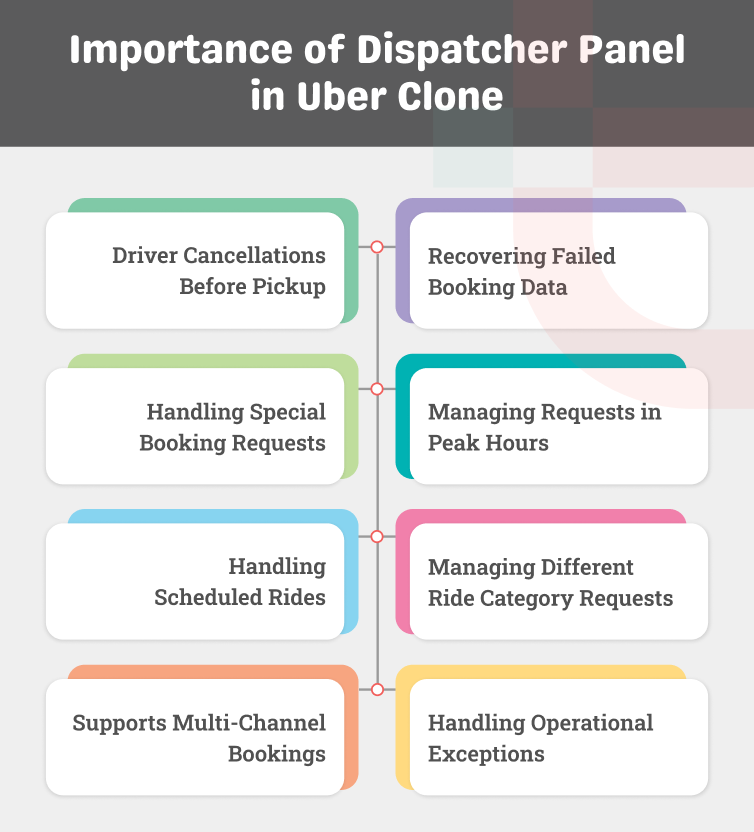
Modern ride-hailing platforms rely heavily on an automated dispatch system. For standard rides, this process is faster, more efficient, and scalable.
However, there are several factors that automation alone can’t provide. This is where a dispatcher panel plays a vital role. Here are some of the factors that showcase the importance of a dispatcher panel in an Uber clone, rather than completely relying on automation.
Driver Cancellations Before Pickup
A driver’s sudden trip cancellation before pickup left the rider stranded with no idea what to do next. The automated system may process to find another available driver.
A dispatcher panel gives your operational team real-time visibility, so they can identify the issues behind cancellations, reassign the trip to a nearby available driver, and minimize riders’ waiting time. This, in turn, helps businesses maintain their service reliability during the period when any unexpected situation arises.
Recovering Failed Booking Data
The automated process means a single system error or a temporary connectivity issue risks the overall booking data.
Whereas a dispatcher panel keeps data for each exceptional trip, reassigns the trip to drivers manually, and takes timely follow-up with the rider, helping businesses manage bookings and customers with a satisfying trip experience.
Handling Special Booking Requirements
Not every rider has a standard booking requirement. For example, corporate clients require premium services and prompt airport transfer services with professional drivers.
With a dispatcher panel, you can manually analyze the specific requirements of such riders to assign them to drivers accordingly.
Managing Requests During Peak Hours
When the ride demand spikes, like concerts, festivals, and other special occasions, creating a challenging task to assign rides to drivers, it becomes difficult to manage through automation alone.
Here, the dispatcher panel helps you determine the high-demand zone, balance ride demand and driver availability, and set booking priorities. This allows you to respond faster to a trip, even during periods of high demand.
Handling Scheduled Ride
Scheduled rides often demand more accuracy and transparency. Customers booking rides in advance clearly state the availability of a particular driver and vehicle on that specific date and time.
A dispatcher panel can give your team complete scheduled trip data, along with riders and driver details. This helps you assign those to drivers as per the requirements
Managing Different Ride Category Requests
Several platforms offer multiple ride categories, including ride shares, rentals, and premium vehicles. A category mismatch or inability to fulfill any specific customer requirements can affect the overall customer experience.
The dispatcher can evaluate available drivers and manually allocate the driver to the appropriate vehicle.
Manage Multi-Channel Bookings
Besides app-based bookings, there are many ways a ride-hailing businesses receive requests, such as phone calls, WhatsApp, hotel and airport booking tools, and corporate desks.
With the dispatcher panel, these bookings are easy to manage and assign drivers as an when required.
Handling Operational Exceptions
Duplicate bookings, customer complaints during an active ride, driver delays, and lower app connectivity can interrupt ongoing trips.
A dispatcher panel gives the operational teams the flexibility to assess each trip in real-time, make instant decisions on trip assignments, and resolve issues before they affect the overall customer experience.
Key Capabilities of the Dispatcher Panel
A dispatcher panel is more than just an operational dashboard. The following are the core capabilities that enable dispatchers to keep operations running efficiently through the panel.
Real-Time Trip Visibility
Monitor driver availability with statuses such as active, offline, or on trip, maintain fleets, and track trip status in real time. This enables dispatchers to reassign the trip immediately to another driver in case of delays or immediate cancellations, providing riders with accurate trip updates and minimizing the chances of trip cancellation.
Manual Booking Creation
A dispatcher can create a trip on behalf of a rider who connects with them through a phone call, WhatsApp, a booking tool request, or other offline channels. It also provides fare estimation before confirming the trip and ensures every booking followsthe same operational flow, regardless of the booking channel.
Manual and Automatic Trip Assignment
It supports both automatic and manual dispatching processes. For standard bookings, trips are automatically assigned to nearby available drivers. However, for specific bookings like corporate or VIP customers, the dispatcher can manually allocate the ride to an available driver.
Driver & Customer Coordination
Dispatchers can monitor active rides, coordinate with drivers, and provide customers with accurate trip updates throughout the booking lifecycle. Having a centralized operational view enables faster communication and allows dispatch teams to respond quickly whenever a trip requires additional attention.
Scheduled Ride Management
Dispatchers can view upcoming bookings, assign them to drivers in advance, and modify scheduled trip details as needed, ensuring planned trips remain organized and ready before the scheduled pickup time.
Trip Exceptions Handling
Operational disruptions, such as last-minute trip cancellations by drivers, failed assignments, and duplicate bookings, can be managed directly from the dispatcher panel. With real-time visibility into ongoing operations, dispatchers can review the situation, take action, and keep trips moving with minimal disruption.
Booking Reports Generation
As booking volumes increase, dispatchers need quick access to trip information. Built-in search tools help locate specific bookings instantly, while export functionality allows operational teams to generate booking reports for analysis, auditing, or business reporting without manually compiling records.
Multi-Language Support
For businesses operating across multiple regions, built-in multi-language functionality in the dispatcher panel helps dispatchers work in their preferred language. This ensures consistent workflows and strengthens the ability of a geographically spread business to manage daily operations efficiently.
Specific Trip Request Fulfillment
Not every booking follows a standard dispatch flow. When riders request a particular vehicle category, driver preference, or other service-specific requirements, dispatchers can manually allocate the most suitable driver to ensure those requests are fulfilled without affecting operational efficiency.
Launch Your Uber Like Ride-hailing Platform with a Dedicated Dispatcher Panel
Challenges Your Ride-Hailing Operation Faces Without a Dispatcher Panel
Non-App Bookings Stay Invisible
Not every ride request comes from a rider app. Depending on the market and customer base, bookings may come from multiple channels, including phone calls, WhatsApp, hotel partnerships, and corporate accounts.
Without a centralized dispatcher flow, these bookings often remain written on paper or saved in a spreadsheet. This results in major gaps in booking records, reporting, and overall visibility into business performance.
Manual Ride Coordination
Small businesses often coordinate the ride personally. While this approach may work with a small number of daily bookings, it becomes difficult as the daily booking volume increases, with a rapidly growing driver network and operational responsibility that scales.
Without a dedicated dispatcher panel, the team had no structured environment to monitor each trip activity, perform streamlined assignments, and manage rides more efficiently.
Limited Operational Visibility
Managing a ride-hailing business means you are required to keep updated with what is happening around the trips 24/7. This includes knowing which drivers are available or active.
A platform without dispatcher panel support may not provide a centralized view of trips in real time, making it difficult to identify key pain points and make informed business decisions.
Failed Bookings Go Unrecovered
Unexpected situations such as driver shortages, assignment failures, or last-minute cancellations are inevitable in ride-hailing operations. Without a dedicated operational interface, identifying these issues and recovering affected bookings often takes longer.
This delays ride recovery, increases customer waiting time, and creates additional pressure on operational teams during busy periods.
Managing Peak Demand
The demand for taxis significantly increases during any special occasion, holiday, or event. It creates difficulties for businesses to predict increasing demand and manage driver availability without proper dispatcher support, making it challenging to maintain both demand and supply on time.
Communication Bottlenecks
From confirming the trip until the driver arrives at the customer’s doorstep, clear communication is needed throughout the process.
An automated system can speed up the trip assignment process, but without a centralized dispatcher workflow, customers may miss important updates on trips. This results in delays in driver arrival, missed information, and slower resolution.
Poor Driver Utilization
To match the growing demand for trips in the market, businesses must track drivers’ availability in real-time. A lack of operational visibility can result in uneven driver network distribution, keeping drivers in low-demand areas.
Multi-City Operations Become Complex
Expanding the business means increasing ride volume, fulfilling multiple customer expectations, and tracking driver availability.
Without a dedicated dispatcher panel, businesses may struggle to manually meet growing market demand and maintain service standards.
Maintaining Customer Experience Becomes Harder
Retaining customers means delivering a more satisfying experience. A ride-hailing platform without a clear dispatching process can lead to delays in trip assignments, unresolved ride issues, and slower communication, which can leave customers with poor ratings.
When You Don’t Need a Dispatcher Panel
A dispatcher panel is crucial to your ride-hailing operation, but that doesn’t mean that every business needs one from day one of launching. Below are some of the factors that you can avoid when integrating a dispatcher panel into your platform.
Testing the Market with a Small Fleet
If you are launching your MVP to validate your idea in your targeted market, you may have a limited number of vehicles, a small driver team, and manually manageable daily bookings.
The primary focus at this stage is not to increase the trip volume; instead, it is to understand your target audience’s demand, improve user experience, and validate your business model.
Operating an App-only Booking Model
Many businesses run a completely app-based booking model, where ride requests can only be placed using the app, and automated matching handles the rest of the booking process. This eliminates the immediate requirement of manual dispatch control.
The answer depends on the long-term growth strategy of a particular taxi business. Many businesses add other channels instead of a dispatcher panel, such as direct corporate accounts, hotel partnerships, and phone-based support.
Manages Operations Manually
In the initial stages, a founder may prefer to handle the ride assignment tasks manually. They coordinate with rides, communicate with drivers, and resolve customer issues manually.
At the start, it is easy to manage, but as the demand increases, it may become difficult to handle all rides, drivers, and varied customer requirements at the same time.
What to Consider When Selecting a Dispatcher Panel?
Below are some specific things to check before you decide to incorporate a dispatcher panel for your ride-hailing app.
- Test the live map functionality in real business scenarios, and do not rely on static screenshots. Evaluate how quickly driver locations update, and how multiple active trips appear.
- Go through the dispatcher booking and trip assignment process via a demo. Analyze each step, the time it takes to assign a ride to a driver, and reassign a booking.
- Ensure a similar flow for multiple channel bookings, generate reports, and work on the same payout system. A disconnected booking can create report gaps and operational challenges.
- Ask whether the dispatcher panel comes as a separate module or a kind of feature added within the admin panel. It is built for handling real-time operational tasks, and not a handful of dispatch features bolted onto an existing admin dashboard.
- Verify driver assignment flexibility. Check carefully whether a dispatcher can manually assign a specific driver, reassign the trip, and prioritize the rides based on location, availability, or vehicle type.
- Test the capacity of the platform to handle operational exceptions. Go through the live demo of cancellation requests or those not fulfilled, and analyze the accurate reason.
- It must support multiple booking channels, including phone calls, WhatsApp, corporate accounts, partner integrations, and hotel desks, without creating any operational complexity.
- Evaluate it against future business growth. Ensure the dispatcher panel supports the growing customer base, the huge driver network, and the increasing trip volume.
- Ask about other customization and integration flexibility. Every business has varied requirements, so confirm with your provider what customization support it requires in your business and whether the panel supports it or follows a rigid process.
How AI is Transforming Modern Dispatch Operations
The future of transportation is led by AI, and dispatch is a core part of the entire operation. Still, many businesses hesitate to adopt it, thinking that AI will replace their job. However, the reality is that it works as a complement, rather than a competitor.
AI helps operational teams identify core issues at an early stage, provides smart recommendations, and improves the operational decision-making process. In fact, many leading ride-hailing platforms use AI to become more proactive by supporting operational decisions such as:
- Predictive analytics that indicate businesses in advance regarding high-demand areas and peak zones, so they can allocate resources before the spike hits.
- A smart dispatch engine that evaluates the upcoming trips and automatically matches them with nearby drivers based on their location, availability, and vehicle type.
- AI-powered route optimization that maps faster routes, avoids congestion, and reduces delays before they affect the ongoing trip.
Conclusion
It should be clear why an Uber clone needs a dispatcher panel to support real-world ride-hailing operations. While the automated dispatch system handles smart ride matching, a dedicated dispatcher panel enables businesses to manage multi-channel bookings, coordinate live drivers, handle exceptions, and maintain overall service consistency.
Now, if you are planning to launch or expand your ride-hailing business, Elluminati’s Uber clone app solution includes a dedicated dispatcher panel for managing real-time ride operations. Your team can monitor trips, coordinate drivers, create and manage bookings from different channels, reassign rides, handle operational exceptions, and manage scheduled or specific trip requests from a centralized interface.
FAQs
A dispatcher panel focuses on real-time ride operations, including live booking, driver assignment, and trip issue resolution. The admin panel focuses on overall business operations, including setting pricing, managing the user base, financial reports, and platform activities.
A taxi startup with only a few drivers does not require a dedicated dispatcher panel from day one of its operation. However, built-in dispatcher functionality from the beginning helps them manage their operation in the future with growing user demands and a driver network.
Yes. You can easily track all bookings made by phone or WhatsApp through a dedicated dispatcher web panel, along with details like trip assignment date, driver name, trip ID, etc, and can generate the overall report.
It highly depends on business size. A small business can manage the entire dispatch process by itself. However, a large-scale enterprise requires its own dispatch teams to manage high-volume rides and operational complexity.
The following are ways a dispatcher panel can drive a better experience for riders:
- Offering faster responses
- Multi-channel booking support
- Active trip monitoring access
- Minimizing their wait times
- Quick re-routing of the trip during delays